







Contact Information: 3001 Mercer University Dr 239 Moye Center Atlanta, GA 30341 (678)-547-6246
moniri_nh at mercer.edu |
 |
|
|||||||||||||







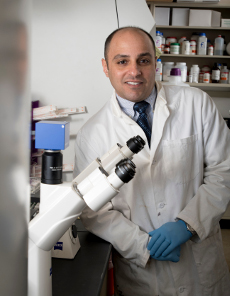
Laboratory Research Focus Areas:Dr. Moniri's training has focused on molecular pharmacology and signal transduction of G protein-coupled receptors (GPCR) as well as the design and development of novel agents which modulate GPCR function. Current research interests include characterization of free-fatty acid (FFA) GPCRs, and their role in human health and disease. Our current projects focus on the role of FFA receptors, including the long-chain FFA receptors FFA1/GPR40 and FFA4/GPR120, as well as the short-chain FFA receptors FFA2/GPR43 and FFA3/GPR41 in metabolism, neurodegeneration, inflammation, and cancers. An NIH/NHLBI-funded grant also supports projects that seeks to understand the role of reactive oxygen species (ROS) in regulating the β2-adrenergic receptor (β2AR), which is critical in the treatment of airway disorders such as asthma and COPD. Another recent NIH grant in collaboration with Dr. Clint Canal supports the study of the mechanisms of the drug of abuse xylazine on α2-adrenergic receptors. Along with Dr. Canal, Dr. Moniri is also co-founder of Channel Therapeutics, a biopharmaceutical company that seeks to develop drugs that act with high selectivity at muscarinic acetylcholine receptors for treatment of a variety of brain, gastrointestinal, urinary, and airway disorders. Dr. Moniri's lab also collaborates with Dr. Raquib Hasan on three American Heart Association and one NIH-funded projects that examine the roles of various intracellular signaling pathways in hypertension. For more detailed information on research in the Moniri lab, click here. |
||
Teaching:Dr. Moniri currently teaches physiology, pathophysiology, pharmacology, and medicinal chemistry within various systems and disorders in the Doctor of Pharmacy (Pharm.D.) curriculum at the College of Pharmacy. PharmD courses taught in include Musculoskeletal Disorders and Pain (P3), Endocrine Disorders (P2), Nervous System Disorders (P3), and Infectious Diseases (P2). For more detailed information on teaching, click here. |
|
Peer-Reviewed Publications: |
||
|
(Click here for PubMed listing of publications) |
||
Teyani RL and Moniri NH. Biased agonism at free-fatty acid receptor-4 (FFA4/GPR120). Pharmacology & Therapeutics. 266:108784, 1-9, 2025. PMID: 39719174 Higgins JP, Carlisle JW, Moniri NH, Gupta S, Oduah EI, Leat T. Sotorasib for the treatment of locally advanced/metastatic non-small cell lung cancer. Future Oncology. 21(1):63-71. PMID: 39601038 Teyani RL, Moghaddam F, Moniri NH. ROS-mediated regulation of β2AR function: Does oxidation play a meaningful role towards β2-agonist tachyphylaxis in airway obstructive diseases? Biochemical Pharmacology. 226:116403, 1-7, 2024. PMID: 38945277 Singh K, Teyani RL, Moniri NH. Agonists and hydrogen peroxide mediate hyperoxidation of β2-adrenergic receptor in airway epithelial cells: Implications for tachyphylaxis to β2-agonists in constrictive airway disorders. Biomedicine and Pharmacotherapy, 168:115763, 1-13, 2023. PMID: 37865997 Teyani R and Moniri NH. Gut feelings in the islets: The role of the gut microbiome and the FFA2 and FFA3 receptors for short chain fatty acids on β-cell function and metabolic regulation. British Journal of Pharmacology, 180:3113-3129, 2023. PMID: 37620991 Menon SN, Daniel ML, Zerin F, Ezewudo E, Simon NP, Green AJ, Pandey A, Mackay CE, Hafez S, Moniri NH, Hasan R. Neflamapimod inhibits endothelial cell activation, adhesion molecule expression and leukocyte attachment by inhibiting p38 MAPKα and NF-κB signaling. Biochemical Pharmacology. 214:115683, 1-14, 2023. PMID: 37429422 Karmokar PF and Moniri NH. Free-fatty acid receptor-1 (FFA1/GPR40) promotes papillary RCC proliferation and tumor growth via Src/PI3K/AKT/NF-κB but suppresses migration by inhibition of EGFR, ERK1/2, STAT3 and EMT. Cancer Cell International, 23:126, 1-19, 2023. PMID: 37355607 Thurston MM, Moniri NH, Bowen JP, Winkles CL, Miller SW. Managing the “Three Cs" of Academic Literature Authorship: Contributions, Credit, and Conflict. American Journal of Pharmaceutical Education. 87: 100009, 1-4, 2023. PMID: 37288678 Karmokar PF and Moniri NH. Free-Fatty Acid Receptor-4 (FFA4/GPR120) differentially regulates migration, invasion, proliferation and tumor growth of papillary renal cell carcinoma cells. Biochemical Pharmacology. 213:115590, 1-13, 2023. PMID: 37201877 Rizzo AR and Moniri NH. Omadacycline for management of Mycobacterium abscessus infections: A review of its effectiveness, place in therapy, and considerations for use. BMC Infectious Diseases. 22(1):874, 1-11, 2022. PMID: 36419143 Karmokar PF and Moniri NH. Oncogenic signaling of the Free-Fatty Acid Receptors FFA1 and FFA4 in human breast carcinoma cells. Biochemical Pharmacology. 206:115308, 1-10, 2022. PMID: 36309079 Singh K*, Senatorov IS*, Cheshmehkani A, Karmokar PF, Moniri NH. The skeletal muscle relaxer cyclobenzaprine is a potent non-competitive antagonist of histamine H1 receptors. Journal of Pharmacology and Experimental Therapeutics. 380(3):202-209, 2022. PMID: 34992159 Moniri NH and Farah Q. Short-chain free-fatty acid G protein-coupled receptors in colon cancer. Biochemical Pharmacology.186:114483, 2021. Senatorov IS, Cheshmehkani A, Burns RN, Singh, K, Moniri NH. Carboxy-terminal phosphoregulation of the long splice isoform of Free-Fatty Acid Receptor-4 mediates β-arrestin recruitment and signaling to ERK1/2. Molecular Pharmacology. 97:304-313, 2020. Rambacher KM and Moniri NH. Cysteine redox state regulates human β2-adrenergic receptor binding and function. Scientific Reports. 10:2934, 1-15, 2020. Chitre NM, Wood BJ, Ray A, Moniri NH*, Murnane KS*. Docosahexaenoic acid protects motor function and increases dopamine synthesis in a rat model of Parkinson's disease via mechanisms associated with increased protein kinase activity in the striatum. Neuropharmacology. 167:107976, 2020. Rambacher KM and Moniri NH. The β2-adrenergic receptor-ROS signaling axis: An overlooked component of β2AR function? Biochemical Pharmacology. 171: 113690, 2020. Chitre N, Moniri NH, Murnane KS. Omega-3 Fatty Acids as Druggable Therapeutics for Neurodegenerative Disorders. CNS & Neurological Disorders - Drug Targets. 18(10):735-749, 2019. Moniri NH. Reintroduction of quazepam: an update on comparative hypnotic and adverse effects. International Clinical Psychopharmacology. 34(6):275-285, 2019. Murnane KS, Guner OF, Bowen JP, Rambacher KM, Moniri NH, Murphy TJ, Daphney CM, Oppong-Damoah A, Rice KC. The adrenergic receptor antagonist carvedilol interacts with serotonin 2A receptors both in vitro and in vivo. Pharmacology Biochemistry and Behavior. 181:37-45, 2019. Moniri NH, Momary KM, McMahon TJ, Nayee E. Statin-associated Achilles tendon rupture and reproducible bilateral tendinopathy upon repeated exposure. Mayo Clinic Proceedings. 93(10):1531-1532, 2018. Senatorov IS and Moniri NH. The role of free-fatty acid receptor-4 (FFA4) in human cancers and cancer cell lines. Biochemical Pharmacology. 150:170-180, 2018. Cheshmehkani A, Senatorov IS, Dhuguru J, Ghoneim O, Moniri NH. Free-fatty acid receptor-4 (FFA4) modulates ROS generation and COX-2 expression via the C-terminal β-arrestin phosphosensor in Raw264.7 macrophages.Biochemical Pharmacology. 146:139-150, 2017. Moniri NH. Free-fatty acid receptor-4 (GPR120): cellular and molecular function and its role in metabolic disorders. Biochemical Pharmacology. 110-111:1-15, 2016. Cheshmehkani A, Senatorov IS, Kandi P, Singh M, Britt A, Hayslett R, Moniri NH. Fish and flax seed oil supplemented diets increase FFAR4 expression in the rat colon. Inflammation Research. 64(10):809-15, 2015.
Singh M and Moniri NH.
Reactive oxygen species as β-adrenergic
receptor signal transducers.
Journal of
Pharmaceutics and Pharmacology.
2(1):
8-15, 2014.
Burns RN,
Singh M, Senatorov IS, Moniri NH.
Mechanisms of homologous and
heterologous phosphorylation of FFA receptor
4 (GPR120): GRK6 and PKC mediate
phosphorylation of Thr347, Ser350, and
Ser357 in the C-terminal tail.
Biochemical Pharmacology. 87:650-659, 2014. Ryan GJ, Moniri
NH, Smiley DD. Clinical effects of
once-weekly exenatide for the treatment of
type 2 diabetes mellitus. American Journal of
Health-System Pharmacy. 70(13):1123-1131,
2013. Gleason BL, Siracuse MV, Moniri NH,
Birnie CR, Okamoto CT, Crouch MA.
Evolution of Preprofessional Pharmacy
Curricula. American Journal of Pharmaceutical Education.
77(5):95; 1-8, 2013. |
||
|
Book Chapters: |
||
|
Moniri NH. Drugs used to induce/support sedation or anesthesia. Foye’s Principles of Medicinal Chemistry. Chapter 14 . Harrold MW, Beck K, Roche VF, Zito SW, Lemke TL, Williams DA, eds. Lippincott, Williams, & Wilkins, Philadelphia, PA, 9th ed., 2025. Moniri NH. Drugs used to induce/support sedation or anesthesia. Foye’s Principles of Medicinal Chemistry. Chapter 12. Roche VF and Zito SW, Lemke TL, Williams DA, eds. Lippincott, Williams, & Wilkins, Philadelphia, PA, 8th ed., 2019. Moniri NH. Sedative-Hypnotics. Foye’s Principles of Medicinal Chemistry. Lemke TL and Williams DA, eds. Lippincott, Williams, & Wilkins, Baltimore, MD, 7th ed., 2012. |
||
Copyright 2026©Mercer University
All Rights Reserved