|
|||||||
|
Office Hours |
|||||||
|
Office Phone 301-5616 |
|||||||
|
|
Wilderness Weekend |
||||||
COURSE DESCRIPTION:
To begin your college career we will journey the path of self-exploration. How do I identify myself? How is my identity composed? Where and how does my-self intersect with others as my identity is formed? How does my race, class and gender frame and inform my self-development? How do poverty and privilege alter my self-development? How do I live consciously in a world that may no longer sustain us? These and other questions will be probed as you learn to read critically, self-reflect, write well, articulate your thoughts, write digital stories, use resources, meet others and learn about yourself. This is the nature of our course.
We are fortunate to have three Peer Advisors (Kim Campbell, Elizabeth Cobb and Wesley Sanders) working with us. They will help you with problems, projects, misunderstandings, academic difficulties, etc. They will comment on (but not grade papers and journals, help with discussions, lead some class sessions, and generally be available to help you or me. Use them respectfully and wisely.
PREREQUISITES:
There are no prerequisites for this course. I do expect you to rise to college level work in reading, writing, and speaking.
REQUIRED TEXTS:
Hacker, A Pocket Style
Manual
The Mercer Reader
Unbowed
Sold
The Creation by E. O. Wilson
Aristotle, Nicomachean Ethics, Focus Publishing
A Dictionary
Other handouts as required
UPON SUCCESSFULLY COMPLETING THE COURSE STUDENTS WILL BE ABLE TO:
Read sections of a
text and write a clear, error-free reflection/analysis.
Complete one or more texts and write a coherent, grammatically correct paper
with a thesis, supporting arguments, and a conclusion.
Courteously participate in class discussion with good listening and speaking
skills.
Read and write critically.
Develop critical thinking skills in applied situations.
Unite classroom experiences with real-world problem solving.
Acceptably give a coherent and organized digital story presentation
Become aware of what factors helped compose you.
Recognize the need to live conscientiously in light of sustainability threats to
our earth.
Demonstrate computer literacy in the use of e-mail, Internet, Blackboard,
Facebook, and word
processing.
COURSE REQUIREMENTS:
Attendance: Attendance is critical and you are expected to come to class, to the fourth hour (T 4:15) and to required outside activities such as Service Learning activities and other events as required. More than three absences will affect your grade as follows: a reduction from A to B+ for the fourth absence, from B+ to B for the fifth, etc. If your grade is a C in the course, absences four and five will reduce the grade to a D. Eight or more absences automatically means you fail the course.
Attendance includes participation. To participate means not only being in attendance, but also providing thoughtful, and informed input as your part of the classroom discussion. I am looking for evidence that you have read the text carefully and thought about the issues involved, and I observe your ability to contribute and listen, your moral courage in offering ideas, the appropriateness of your comments, and your tact and courtesy. See Policies and Grading for specifics.
You are expected to use your Mercer email, and be logged on to our private Facebook group, our Mercer Mobile group, and to monitor your grades, Blackboard.
Also, as part of your attendance and participation, you, either individually or
with a partner will be responsible for leading discussion on class readings
several times during the semester. Even though you are always expected to be
prepared, you will be forewarned!
Daily Assignments “Dailies”:
For each class session you will submit a (typed, no more than one page)
analysis, which can relate to the questions for your Discovery Journal, and
which demonstrates your understanding of the more important arguments or topics
the author(s) is (are) trying to make in the day's assigned readings.
These dailies should identify a thesis or main point. Ask yourself what the author is trying to convince you of and how. These dailies are to be analytical. In closing, you can raise objections, voice agreement, or share any strong reactions the readings. This is NOT a summary; find a thesis and develop it.
Students are responsible for
writing dailies on the assigned readings for each class day. You must cite for
direct quotations and for paraphrasing or re-telling. These dailies are not to
be argumentative or persuasive, rather, they are to be analytical (not for the
sake of argument), but to understand. What does this mean? Look at the elements.
How do they fit together? What have you learned? How might things be different?
Engage in honest, self-reflective, critical analysis of the issues and actively
use the texts. I expect clarity, creativity, depth, and concrete connections to
the reading materials and class discussions. NO LATE dailies will be accepted,
and there will be no extensions on dailies. Each daily note earns either a 9-10
(A), 7-8 (B), 5-6 (C), or 3-4 (schlacky, D). If there are no citations, it will
earn a zero. Do NOT email dailies. We will sometimes post dailies to our
private Facebook group for group editing.
Discovery Journals:
(Shamelessly copied from Dr. Deneen Senasi)
For your Discovery Journal, you will need a journal with
heavy-weight paper (like an artist’s sketch book available in craft or office
supply stores). You will also need a glue stick to attach various items to the
journals’ pages, especially if you prefer typing to more old-fashioned means of
inscription. I encourage you to decorate your Discovery Journal in any way you
like. since such creative embellishments, in addition to providing creative
outlets, will literally map out your intellectual and emotional journey through
the
course. In this and other ways, the time you spend on your Discovery Journal
will help to
cement what I hope will be your own emerging awareness of yourself and your
place in the environment.
In practical terms, the assignment calls for you to insert your Daily Questions
into the journal and then share them in our class discussion. To make your
response more concrete, for each Daily Question, you should select at least one
passage from the day’s reading (at least 5 lines in length) and mark it in your
text, which will help get discussion started on that issue. Include citations
for each passage alongside the corresponding question in your entry for that
day. These questions may help you formulate your dailies, and both your
Discovery Journal and dailies help you craft your essay assignments. Responses
to outside class activities, service, Wilderness Weekend, internet searches,
etc., can be typed and pasted in your journals. I will announce dates on which
I will collect and evaluate your Discovery Journals. The final grade for the
Discovery Journal will be an average of these evaluations. You MUST bring your
Journal to class
daily; you need your questions for our discussion, and random checks may be
conducted if it becomes clear that the assignment is being neglected.
Part of each class session will be Journal Talk. During
this time we will share ideas about our readings and our Service Learning.
*** Those who consistently get excellent grades on journals, dailies, and papers, may chose to drop either the journal or the dailies in exchange for an agreed upon creative project. Students must still be prepared with questions regarding the readings and self reflection regarding service learning. Those who chose dailies over journals will be asked periodically for service learning reflection dailies.
Pop quizzes as necessary. If I sense that students are not reading carefully and completely, I will give a pop quiz. If you are absent, you receive a zero, if you are tardy, you receive a zero, and your quiz grade over-rides your daily. If you write a flawless daily and fail the quiz, you receive an F for the day. It is your responsibility to be fully prepared for class.
Paper Assignments: Three essays and one final response paper are required. Papers must be typed using proper margins (1") and a standard type font (12 point). Papers are to be stapled, and have your name on each page along with the page number. See below for specific guidelines. NO LATE PAPERS. DO NOT EMAIL PAPERS TO ME. Keep a hard copy of your paper as well as a backup disk in case there is a catastrophe. Guidelines for paper grading are on Web-ct. UNPAGINATED PAPERS WILL NOT BE GRADED.
At any time if you want to discuss a paper grade, come see me. If you receive an F on a paper, see me immediately.
Computer/printer/software difficulties are not considered sufficient grounds for late work. Missing class is no excuse for a late paper. Students should allow ample time for their work to be completed to allow for unforeseen difficulties. That is why I have a detailed syllabus with due dates marked from the beginning of the semester.
Assignments must adhere to the length, format and topic matter requested to avoid grade reductions. If you are dissatisfied with a grade, please discuss it with me immediately, not later in the semester.
**** Each of you will participate in an attic installation project, which we can schedule in as convenient a manner as possible.
Expanded grammar information and guidance may be found at: http://grammar.ccc.commnet.edu/grammar/ or http://www.bedfordstmartins.com/hacker/pocket/
NO TITLE PAGE Titles are to be centered and capitalized on
the first page of your narrative. Do not underline or put quotation marks
around the title. Include a Works Cited page and follow MLA citation style.
Format your document using 1 inch margins, 12 point Times New Roman font,
double-spacing, and page numbers. Refer to Diana Hacker’s A Pocket
Style Manual or The Bedford Handbook if you have questions.
The papers are as follows:
1. Paper one: The nature of self-definition:
education, social status, race, etc.?
2. Paper Two: What does it mean to be human; how is our humanity reflected in
our natural environment and our relationships?
3. Paper Three:
4. Paper Four: Responses to a set of end-of-the-semester questions.
Digital Stories
Besides the final project, each student will develop one digital story. The due dates for the stories are on the Calendar of Events. Instruction and story development will occur within the context of the course, and written instructions are available on Webct and on this webpage: DS Instructions.
Digital Story:
Your digital story will be presented to the class and maybe guests, during the last few days of school. The presentation will be a creative effort, which incorporates what you learned from your service learning experience at Joshua House intertwined with what you learned about how one composes oneself and fits in the environment. How do factors of race, socio-economic status, privilege, or gender affect this composition? How do pride, courage, honor, and heroism frame one’s selfhood? How is one a good steward of our earth?
Outside Class Activities:
Each student will be involved in two civic engagement projects. The Afterschool Project at Joshua House will require everyone's participation. More to come later. And there is a second volunteer project: one of two, a little boy, and The Caring for Creation Conference. ALL STUDENTS MUST BE INVOLVED IN CIVIC ENGAGEMENT AND PARTICIPATE IN THE CONFERENCE: (October 29-31) October 31 is a Service Day and is REQUIRED.
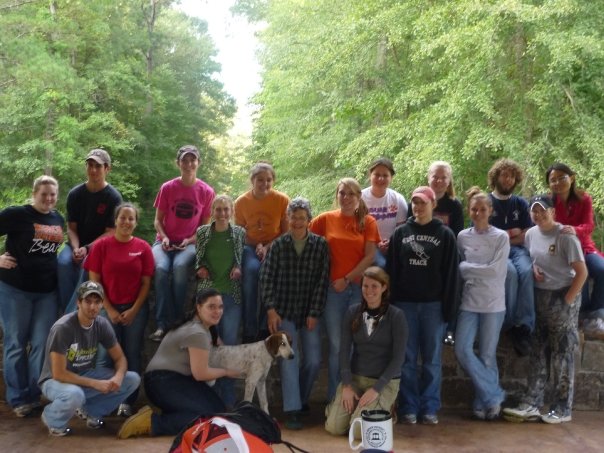
Wilderness weekend: Sept. 25-27 More to follow. However, be informed that his requirement must be fulfilled in order to pass the course. ANY STUDENT WHO FAILS TO ATTEND WILDERNESS WEEKEND FROM THE BUS RIDE OUT TO THE BUS RIDE BACK WILL AUTOMATICALLY FAIL FYS-X 101.
Fourth Hour (T ): Four of the fourth hour time slots will be for activities outside the classroom. One of those has to be a play, a lecture, a poetry reading, and one a musical event. Each event requires a one-page typed response. We will meet for at least two lab periods. Your second service learning project will fulfill the requirements for the other lab times.
Other outside assignments and activities as they emerge.
GRADING:
Papers 30% (Three essays and responsive
paper)
Digital Story 15%
Dailies 15%
Participation/Attendance 25%
Discovery Journals 15%
90-100 = A 77-79 =
C+
87-89 = B+ 70-76 = C
80-86 = B 60-69 = D
Students are responsible for the information on the Policies and Grading page of the syllabus. See above link or access via Blackboard.